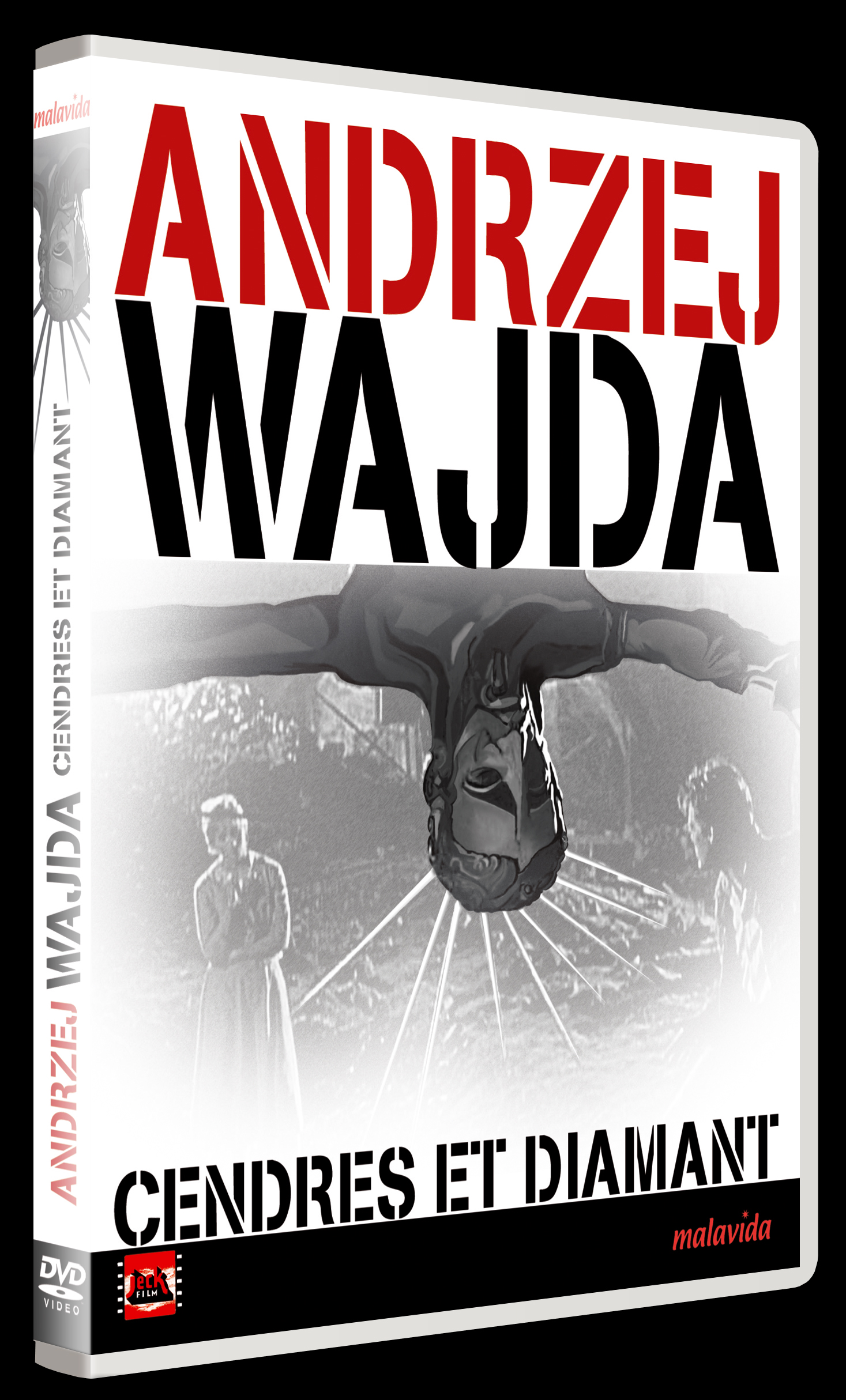
CENDRES ET DIAMANT

Andrzej Wajda

Pologne - 1959 - 108 min

12,00 €

1945, jour de l’Armistice dans une petite ville polonaise, au milieu des combats entre communistes et nationalistes. Un de ces derniers, Maciek, jeune et aguerri par la lutte armée, reçoit l’ordre de tuer le nouveau secrétaire régional du Parti. Mais lui et son groupe se trompe de cible. Attendant une nouvelle occasion d’achever sa mission, il a une liaison fulgurante avec une serveuse.

En rupture de stock

UGS : 17e62166fc85 Catégories : ,

Titre original: POPIOL I DIAMENT
Titre anglais: ASHES AND DIAMONDS

version originale polonaise, sous-titrée en français

1945, jour de l’Armistice dans une petite ville polonaise, au milieu des combats entre communistes et nationalistes. Un de ces derniers, Maciek, jeune et aguerri par la lutte armée, reçoit l’ordre de tuer le nouveau secrétaire régional du Parti. Mais lui et son groupe se trompe de cible. Attendant une nouvelle occasion d’achever sa mission, il a une liaison fulgurante avec une serveuse.


Révélé à Cannes par son deuxième long métrage, KANAL en 1957, Andrzej Wajda se place d’emblée parmi les plus grands réalisateurs européens. Engagé dans la résistance contre l’occupant nazi, il puise dans sa mémoire ce qui va inspirer ses tout premiers films.

Ces films ont permis au réalisateur de conquérir une réputation internationale qu’il n’a cessé d’affermir. Andrzej Wajda apparaît comme l’un des représentants les plus éminents du cinéma polonais et a reçu de nombreuses récompenses tout au long de sa carrière.
La consécration arrive avec la Palme d’Or en 1981 pour L’HOMME DE FER et un César du Meilleur réalisateur pour DANTON en 1983.


FILMOGRAPHIE sélective d’Andrzej Wajda :
1955 : GENERATION
1957 : KANAL
1958 : CENDRES ET DIAMANT
1959 : LOTNA / LA DERNIÈRE CHARGE
1961 : SAMSON
1968 : MELI-MELO
1969 : TOUT EST A VENDRE
1970 : LE BOIS DE BOULEAUX
1977 : L’HOMME DE MARBRE
1981 : L’HOMME DE FER
1982 : DANTON
1987 : LES POSSÉDÉS

Détails

RéalisateurAndrzej Wajda
Année1959
PaysPologne
Durée108 min
CastingZbigniew Cybulski, Bogumil Kobiela, Ewa Krzyzewska

Fiche technique


Warning: Array to string conversion in /home/clients/c0e5814f7e68d40bd2a8beecda6cdb19/sites/malavida.etiennedelcambre.com/wp-content/themes/malavida-storefront/functions.php on line 222
StandardPAL
Format1.66
ZoneZone 2
ImageN&B
SonArray

Bande-annonce

English description

English title: ASHES AND DIAMONDS Original title: POPIOL I DIAMENT Directed by : Andrzej Wajda With : Zbigniew Cybulski, Bogumil Kobiela, Ewa Krzyzewska Poland, 1959, PAL, 1.66 - 108 mn zone 2, black and white, mono Original polish version with french subtitles On the last day of World War II in a small town somewhere in Poland, Polish exiles of war and the occupying Soviet forces confront the beginning of a new day and a new Poland. In this incendiary environment we find Home Army soldier Maciek Chelmicki, who has been ordered to assassinate an incoming commissar. Gorgeously photographed and brilliantly performed, ASHES AND DIAMONDS masterfully interweaves the fate of a nation with that of one man, resulting in one of the most important Polish films of all time. Based on Jerzy Andrzejewski's 1948 novel of the same name, ASHES AND DIAMONDS was adapted for the screen by Wajda and the author. Time and space have been condensed to less than twenty-four hours in and around a single location "the hotel Monopol" giving the drama great theatrical intensity. Maciek, representative of Poland's "lost" war generation, is the tragic hero, compelled to commit a crime by the fatality of history. Bound by the soldier's code of honor to a past steeped in blood, he kills on order without doubts or remorse, even when, as in the case of two working men, he murders in error. His eyes are opened to the possibility of a normal life and the senselessness of further killing only when he falls in love with the bartender Krystyna. Zbigniew Cybulski totally identifies with Maciek, bringing to the role a mysterious inner passion and a number of personal mannerisms, private rituals, and ritualistic props, such as the German canteen out of which he drinks his vodka, and the glasses he rarely removes. ASHES AND DIAMONDS has rightly been lauded as one of the finest of postwar East-Central European films, and the most vital work of the Polish School. It is salutary, however, to remember how much controversy has dogged the film within Poland itself, and that this is more than a matter of regime-led misgivings about a work with potentially subversive accents. It stems from the film's pursuit of conflicting goals: to deal with the Polish Home Army's resistance against the incoming, Soviet-backed Communist regime and yet satisfy both the Polish populace who held that army dear and a Communist party that wielded powers of censorship, even though it had renounced a Stalinist rigor of repression. Andrzej Wajda is a Polish film director. Recipient of an honorary Oscar, he is possibly the most prominent member of the unofficial "Polish Film School" (active circa 1955 to 1963). He is known especially for a trilogy of war films: A GENERATION (1954), KANAL (1956) and ASHES AND DIAMONDS (1958). Four of his movies have been nominated for the Academy Award for Best Foreign Language Film : THE PROMISED LAND (1975), THE MAIDS OF WILKO (1979), MAN OF IRON (1981), and KATYN (2007).