
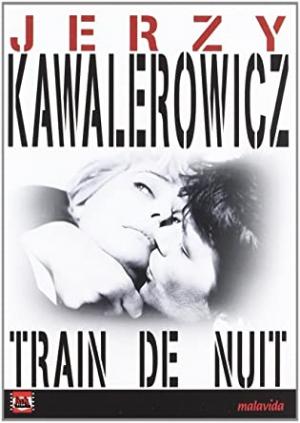
TRAIN DE NUIT

Jerzy Kawalerowicz

Pologne - 1959 - 102 min

11,00 €

Une place dans un wagon-lit à destination de Varsovie achetée à la sauvette lie d’une manière inattendue une jeune femme et un homme. Martha cherche à rompre tandis que Jerzy, chirurgien, est bouleversé par la mort d’une adolescente sur sa table d’opération. La nouvelle d’un meurtre et de la présence de l’assassin dans le train vont venir troubler leur voyage.

En rupture de stock

UGS : 7647966b7343 Catégories : ,

Titre original : POCIAG
Titre anglais : NIGHT TRAIN

Version originale polonaise sous-titrée en français

Une place dans un wagon-lit à destination de Varsovie achetée à la sauvette lie d’une manière inattendue une jeune femme et un homme. Martha cherche à rompre tandis que Jerzy, chirurgien, est bouleversé par la mort d’une adolescente sur sa table d’opération. La nouvelle d’un meurtre et de la présence de l’assassin dans le train vont venir troubler leur voyage.


Jerzy Kawalerowicz réalise son premier film en 1951, mais en France, son talent est révélé avec L’OMBRE (1956) et, surtout, TRAIN DE NUIT (1959). MERE JEANNE DES ANGES (1961), inspirée de l’affaire des possédées de Loudun, obtient le prix spécial du jury au Festival de Cannes. Il connaît la consécration internationale avec PHARAON (1966) un péplum majestueux et métaphysique en lice pour l’Oscar. Les films de Kawalerowicz font aujourd’hui parti des classiques du cinéma polonais, incarnant « l’école Polonaise », avec Munk et Wajda, cette génération de la guerre qui voulut régler les comptes avec le passé et parler de la crise d’identité culturelle de la Pologne de l’après-guerre.


Avec TRAIN DE NUIT, l’obsession plastique de Kawalerowicz se marie à merveille à une trame policière quasi hitchcockienne. Le huit-clos est manié avec virtuosité, Cybulski trouve une nouvelle fois un rôle à sa mesure, et la copie restaurée permet d’apprécier un travail fabuleux sur le noir et blanc.

« Une maestria formelle épatante. » A VOIR A LIRE

« une petite perle de la fin des fifties […] captivante de bout en bout. » SHANGOLS
Détails

RéalisateurJerzy Kawalerowicz
Année1959
PaysPologne
Durée102 min
CastingZbigniew Cybulski, Lucyna Winnicka, Leon Niemczyk

Fiche technique


Warning: Array to string conversion in /home/clients/c0e5814f7e68d40bd2a8beecda6cdb19/sites/malavida.etiennedelcambre.com/wp-content/themes/malavida-storefront/functions.php on line 222
StandardPAL
Format4/3
ZoneZone 2
ImageN&B
SonArray

Bande-annonce

English description

English title: NIGHT TRAIN Original title: POCIAG Directed by Jerzy Kawalerowicz With Zbigniew Cybulski, Lucyna Winnicka, Leon Niemczyk Poland, 1959, PAL, 4/3 - 102 mn zone 2, B&W, mono Original Polish version with French subtitles Two strangers, Jerzy (Leon Niemczyk) and Marta (Lucyna Winnicka), accidentally end up holding tickets for the same sleeping chamber on an overnight train to the Baltic Sea coast. Also on board is Marta's spurned lover, who will not leave her alone. When the police enter the train in search of a murderer on the lam, rumors fly and everything seems to point toward one of the main characters as the culprit. This is a more amorphous and ambiguous tale than other contemporary films of the Polish School, and NIGHT TRAIN seems to lack the direct references to recent history and the contemporary political situation of the Poland of the 1950s that are a hallmark of the style. However, the Hitchcockian atmosphere, the unimaginably tight shots and the overall sense of claustrophobia and dread evoke the sense of disappointment following in the wake of 1956 and the end of the 'Polish Spring'. All of Kawalerowicz's films deal with individual fate in a society being crushed by overwhelming external forces, whether war or politics, in an attempt to examine moral choice under pressure. NIGHT TRAIN is no exception, only here he has created an allegory of misfits among a society of passengers, a society that is predictable, suspicious of individuality, and eager to punish. All of Poland escaping though the night to the end of the line. Ironically, the film may represent in its way the end of the Polish School as well.