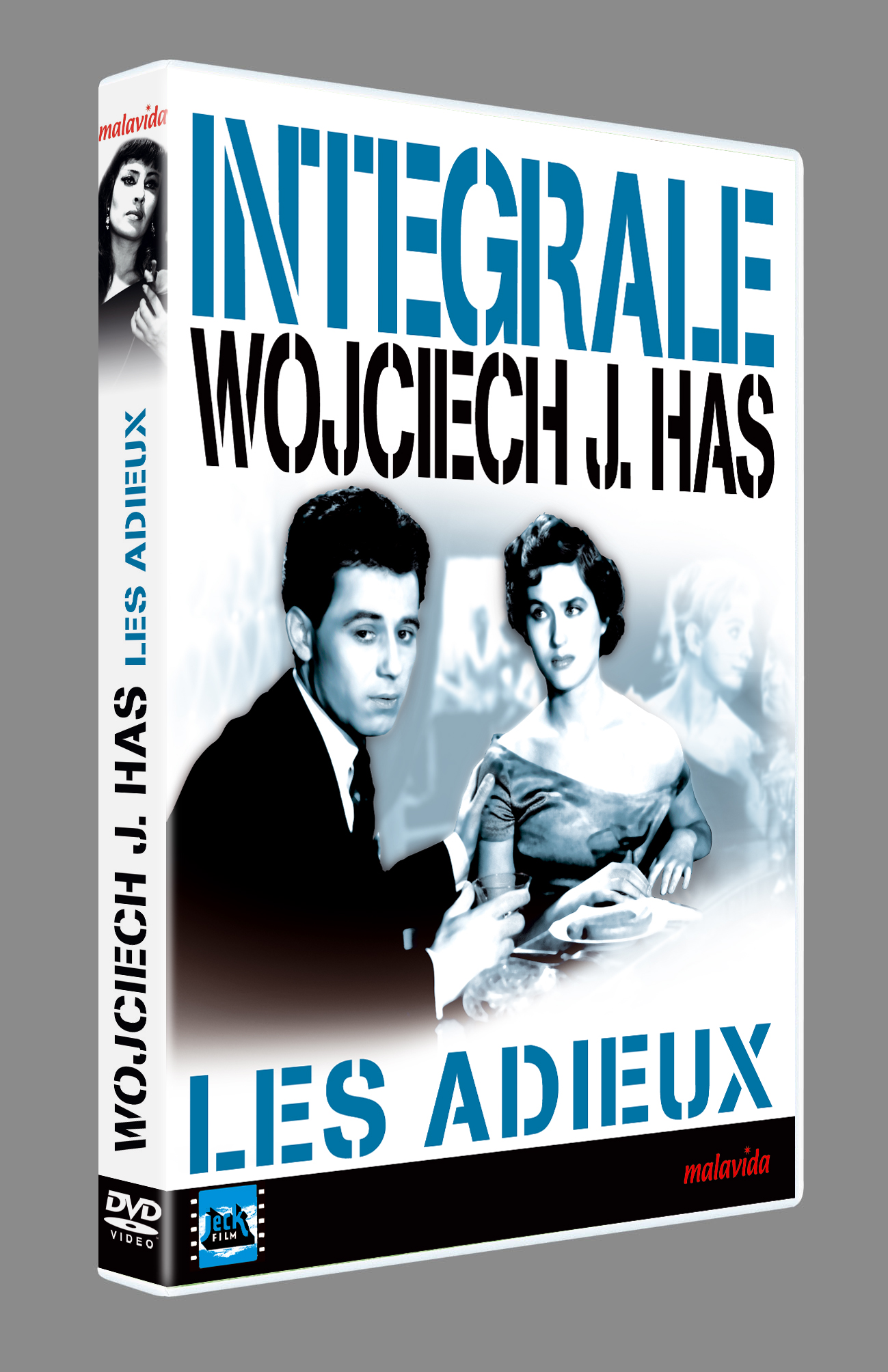
LES ADIEUX

Wojciech J. Has

Pologne - 1958 - 105 min

9,00 €

Pawel, jeune étudiant révolté contre son milieu, rencontre Lidka, une entraîneuse de cabaret. Ils tombent immédiatement amoureux et passent quelques jours dans une auberge près de Varsovie. Des années plus tard, lorsque Pawel sort d’un camp de concentration, ils se recroisent par hasard. Et si le temps a passé – Lidka est désormais mariée à un aristocrate opportuniste, cousin de Pawel – elle semble toujours attirée par lui.

En rupture de stock

UGS : 42a0e188f503 Catégories : ,

Prix FIPRESCI en 1959 au Festival de Locarno

Titre original: POZEGNANIA
Titre anglais: PARTINGS

Pawel, jeune étudiant révolté contre son milieu, rencontre Lidka, une entraîneuse de cabaret. Ils tombent immédiatement amoureux et passent quelques jours dans une auberge près de Varsovie. Des années plus tard, lorsque Pawel sort d’un camp de concentration, ils se recroisent par hasard. Et si le temps a passé – Lidka est désormais mariée à un aristocrate opportuniste, cousin de Pawel – elle semble toujours attirée par lui.

Wojciech J. Has est un des plus grands réalisateurs mondiaux. Il a su créer une œuvre profondément personnelle et originale, sans se cantonner à un genre précis. Virtuose dans son expression visuelle, techniquement d’une maîtrise absolue, il fit aussi preuve d’un profond humanisme. Cette intégrale permet la redécouverte dans une édition de qualité de toute son œuvre, une succession de véritables bijoux, permettant de comprendre un cheminement artistique aboutissant à une série de chefs d’œuvre comme LA POUPEE ou LA CLEPSYDRE.

Prix FIPRESCI en 1959 au Festival de Locarno et 2ème film de Has. Au diapason de Munk et Wajda à la même époque, Has parle de la douloureuse période de la guerre, mais d’une manière totalement différente. Partant d’une tragédie intime, l’art de Has consiste ici éclairer l’Histoire par des personnages qui s’aiment en marge de la société, mais qui souffrent du poids des préjugés sociaux et des souffrances liées au conflit. Le style visuel s’affirme, l’aisance et l’élégance cinématographique d’un grand réalisateur éclatent. En bonus, une passionnante analyse du film, des points de vue artistique, historique et politique par Jacques Mandelbaum (LE MONDE)

BONUS: chapitrage · filmographie · master restauré · analyse par J. Mandelbaum (11 MN)

Détails

RéalisateurWojciech J. Has
Année1958
PaysPologne
Durée105 min
CastingMaria Wachowiak, Tadeusz Janczar, Gustaw Holoubek, Zdzislaw Mrozewski

Fiche technique

StandardDVD 9
Format4/3
ZoneZone 2
ImageN&B

Bande-annonce

English description

English title: PARTINGS Original title: POZEGNANIA Directed by : Wojciech J. Has With : Maria Wachowiak, Tadeusz Janczar, Gustaw Holoubek, Zdzislaw Mrozewski Poland, 1958, DVD 9, 4/3 - 105 min zone 2, black and white Original Polish version with French subtitles The film is an adaptation of a highly lyrical and reflective novel by Stanislaw Dygat, with a screenplay written by Dygat and Has. Taking place in Poland during the late 1930s and early 40s, this melancholy film evokes the insecurity and despair pervading Poland at the time. The story begins immediately before World War II and focuses on Pawel (Tadeusz Janczar), a member of a conservative and bourgeois family, and his love for the thoroughly jaded Lidka (Maria Wachowiak), a dancer. The mismatched pair finds momentary happiness during a trip to the countryside, however social conventions and the lovers' inability to defy them force Pawel and Lidka to split up. The times change, war breaks out and ends; Pawel suffers at Auschwitz concentration camp and Lidka marries his cousin. Years later the two rediscover each other much changed, and find that they may still have the capacity for love. The post-war literature that Has appreciated was not well known abroad. Its authors were called by Marxist critics as "The Reckoning of the Intelligentsia". Has based his film PARTINGS (1958) on a novel written by Stanislaw Dygat, and the film HOW TO BE LOVED (1962) on the eponymous novel by Kazimierz Brandys. These novels focused on how the educated middle class came to terms with the war and the transformation of Poland under socialism. They had a tone of nostalgia and irony, both of which Has reflected in his films. Academy Award Nomination for Best Foreign Film 1977. BONUS: Chaptering, Filmography, Restored Master, Analysis by J. MANDELBAUM (11 mn.)